Flags as a prize for a rowing champion, Maria Boscola
There is a painting in the Correr Museum which will attract your attention. It portrays a woman, proud of holding some colorful flags in her arms, cuddling them as if they were her babies. We are talking about flags for rowing regattas, indeed her trophies.
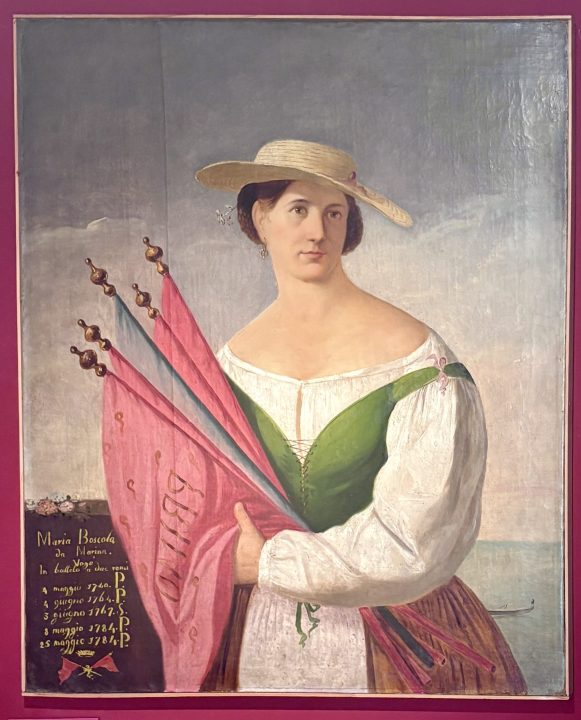
Unknown painter, Portrait of Maria Boscola, Correr Museum Venice, after 1784
An unusual painting at the Correr Museum
This unusual painting portrays Maria Boscola da Marina and it dates back to the late 18th century. Maria Boscola wears a straw hat. Her broad shoulders and generous chest let you imagine strong arms. The dress is quite simple, a white dress over which she put on a green vest, tied at her waist. The only “fancy” details are a gold earring and some delicate little flowers stuck in her brown hair.
I love her eyes. The painter managed to portray her fierce look very well. Her eyes shimmer beautifully.
Although there is little information left regarding her life, we all know though that she was a rowing champion. Holding those flags, in this portrait we learn how many regattas she won and which place she got. In the cartiglio inscription on the side it says the first time she won a rowing regatta was in 1740. Over forty years later, still there, winning one more regatta. Five races are mentioned, she got first, “primo”, four times and second only once.
Detail from unknown painter, Portrait of Maria Boscola, Correr Museum Venice, after 1784
vogò in battelo a due remi
she rowed a boat with two oars
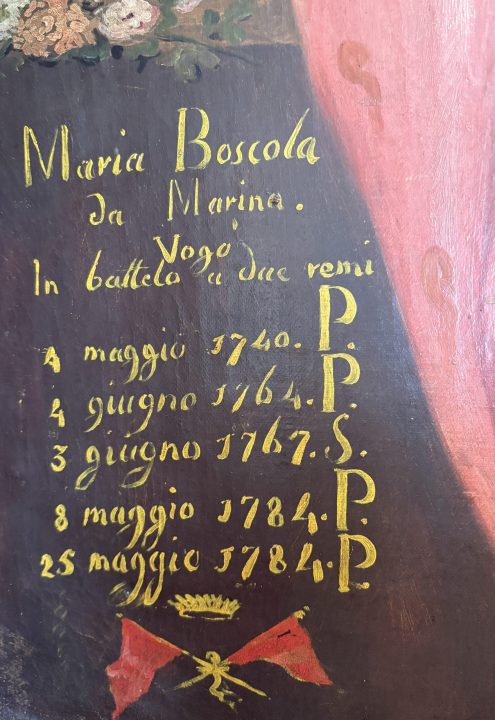
She must have not been too young when she won her last prize, but in Venice we know experience in regattas matters a lot. You can exploit favorable currents, adopt strategies to save energy: you need to be strong and smart.
The boat and the flags of Maria Boscola
In the painting you can just see a part of a boat, maybe the one she would row. “Battello” probably refers to the current “battella” or a sandolo with a stern looking like a shrimp’s tail.
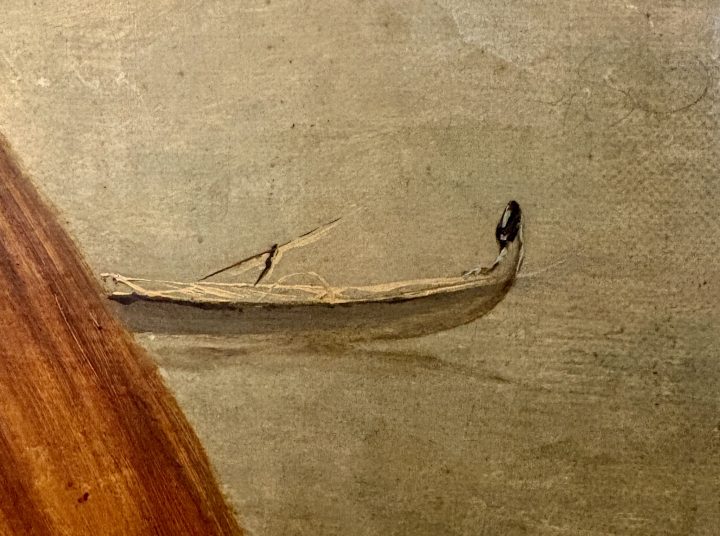
Detail from unknown painter, Portrait of Maria Boscola, Correr Museum Venice, after 1784
The other protagonists in the painting together with Maria Boscola are the flags, the prizes she won. They do matter and in fact, just below the list of the competitions Maria Boscola won, you find two of them crossing each other as a sign of glory and long lasting memory.
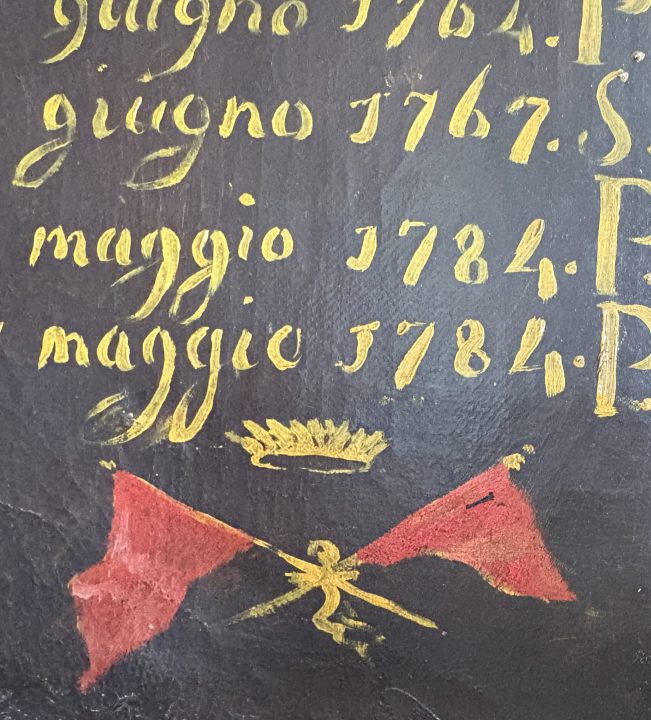
The flags as a detail from unknown painter, Portrait of Maria Boscola, Correr Museum Venice, after 1784
A woman rowing: how common?
What also strikes visitors is that it was a woman rowing. This is not surprising, in fact. Women in Venice have always rowed. Carrying by boat the produce from the vegetable garden islands of Sant’Erasmo and Le Vignole or Cavallino to Venice was something women would do. It is not unusual to see there were regattas women took part in as you can see in the painting by Gabriel Bella at the Querini Stampalia foundation in Venice.
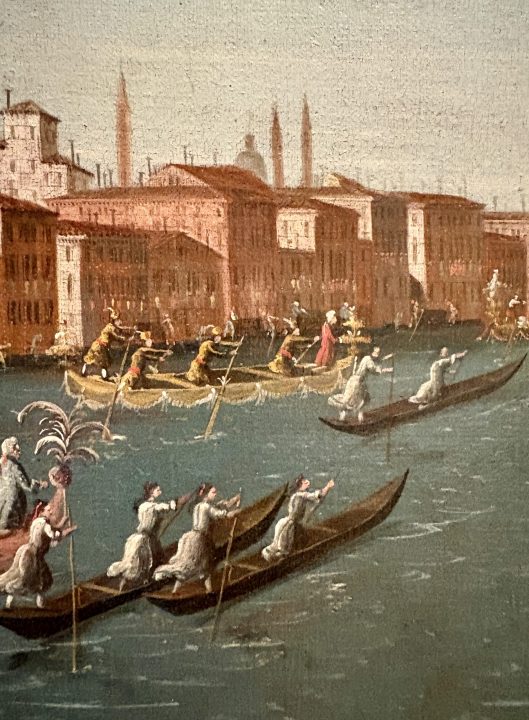
Detail from Gabriel Bella, Regatta delle donne sul Canal Grande, Querini Stampalia Foundation, ca. 1780
Actually, the regattas were events arranged to celebrate the visit of some prestigious guest coming to Venice.
A regatta with a prize
The first regatta with a prize ever recorded was in 1569 when the Archduke Karl of Austria, Emperor Maximilian’s brother, and the Duke of Ferrara, his brother in law, were in Venice. In their honor a regatta was arranged and a flag was given to the ones arriving first.
As a matter of fact, that day two flags were placed on a pole at the arrival of the regatta. When arriving, you had to grab the flag.
It reminds me of a game I played as a child called “rubabandiera”, literally “steal the flag”. I searched on the internet and it looks like in English it is called “steal the bacon” —if you know different expressions to call that game, let me know!
However, when you play “rubabandiera” there is no regatta, no rowing boats, but does this game we play in Venice connect to that event in 1569? It is likely that such a tradition started in the military history, grabbing the flag of the ones you defeated, but I like thinking that it became a harmless game…
It was only later that the flag became a prize you would receive from the hands of some authority on the stage for the final ceremony.
What about the colors of the flags for rowing regattas?
Until 1696 the red flag was for the first one, blue for the second, green for the third… and yes, there was a flag for the fourth one, too, colored yellow. Then colors changed.
It was after the unification of Italy in 1866, when Venice joined the Italian Kingdom, that colors were finally so distributed: red flag for the first, white for the second, green for the third, light blue for the fourth. A way to pay a tribute to the Italian flag, of course. Not bad when talking about its significance.
A prize for winning a regatta in Venice is therefore a very important sign of recognition.
Flags for rowing regattas arranged in Venice nowadays
A few weeks ago the City Council of Venice took the decision to modify the traditional requirements. Now, for the regattas arranged by the City these flags will no longer need to be made by hand. It feels as if the value of winning a regatta will be strongly diminished.
The art of Anna Campagnari, “bandieraia”
I could I not but interview Anna Campagnari, a rowing champion who, since 2010 has studied the history of flags and their art and who has made with her hands thousands and thousands of these flags, many of which she was proud to bring back home after the regattas?
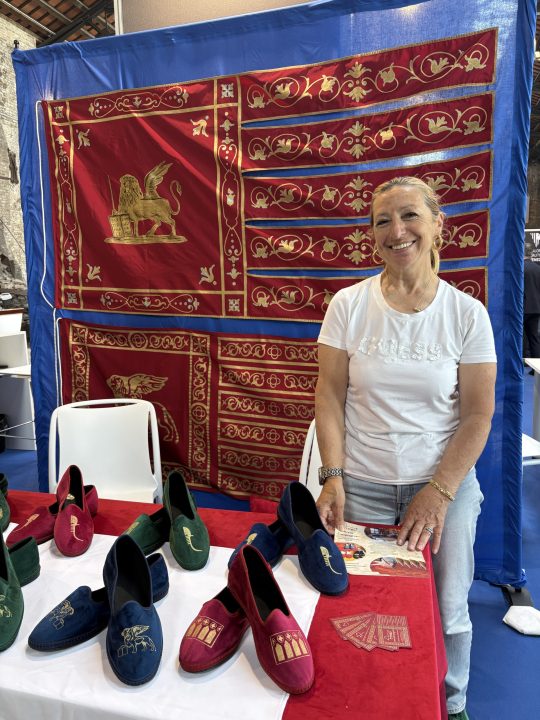
Anna Campagnari at the Venice Boat Show with her flags and hand painted furlane slippers, 2026
Her disappointment shows when she says that it does not depend who makes them, but how they are made. “When you win, you need to receive something adequate”.
She started making these flags when the flag tailor Mr Da Cal stopped working. She took over the tradition and the fact her mother had been a tailor helped. Well, if you know Anna Campagnari, you will easily imagine she could learn making those flags very well without any help. She is incredibly talented, not just in sports!
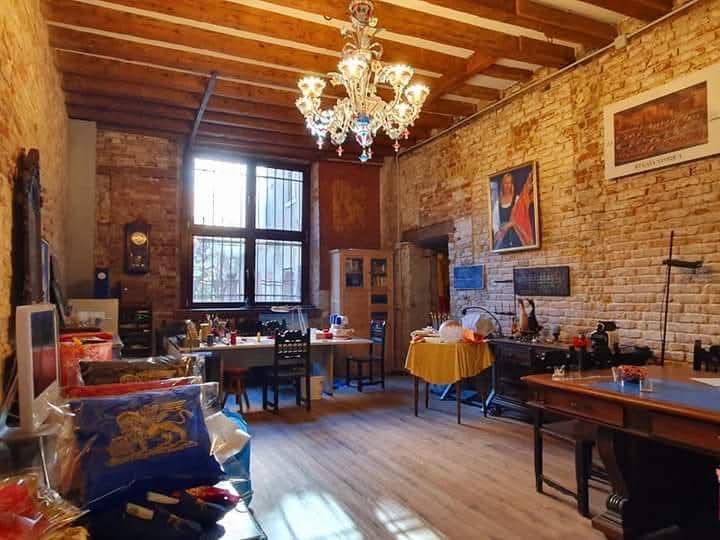
The laboratory of Anna Campagnari in Venice; photo by courtesy of Anna Campagnari
Requirements of flags for rowing regattas in the Venetian tradition
You need a couple of hours to make one.
So far these flags had to follow some quality requirements.
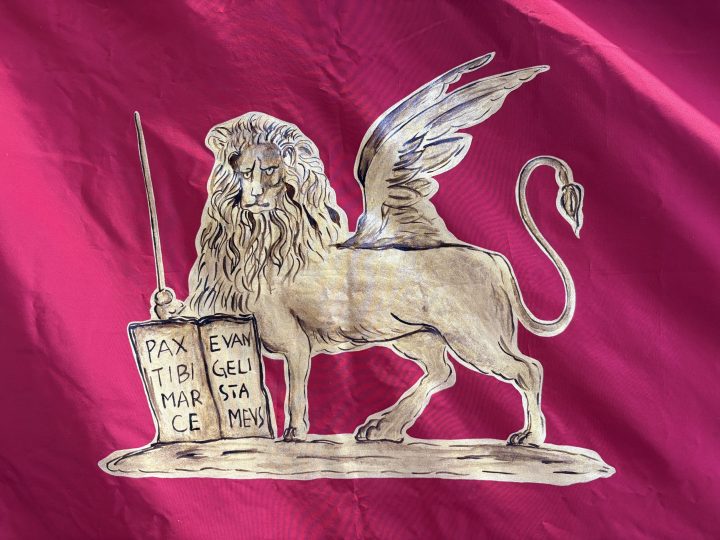
The logo depicting the Venetian lion had to be painted by hand in India ink and gilded, the pole had to be of a certain diameter and the top in wood, gilded, the fringe was meant to be all curled, the thin rope had to be tightened with a little golden ring, the flag had to be made with the three layers of satin, the back all in white.
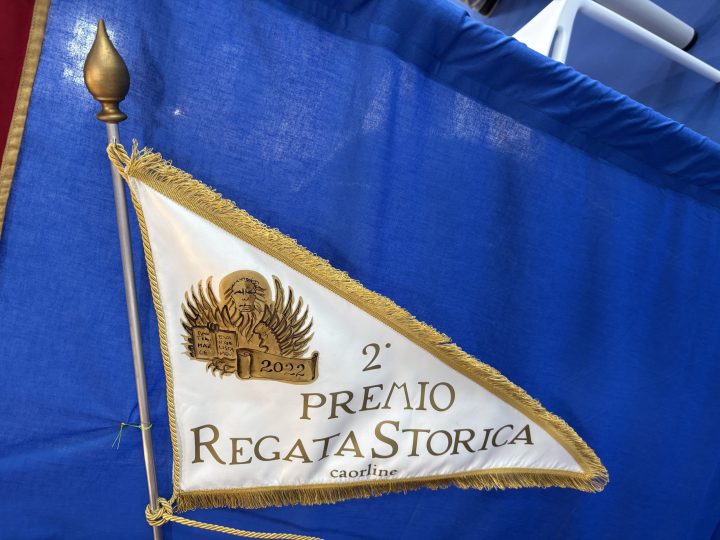
A flag made by Anna Campagnari at the Boat Show in Venice, 2026
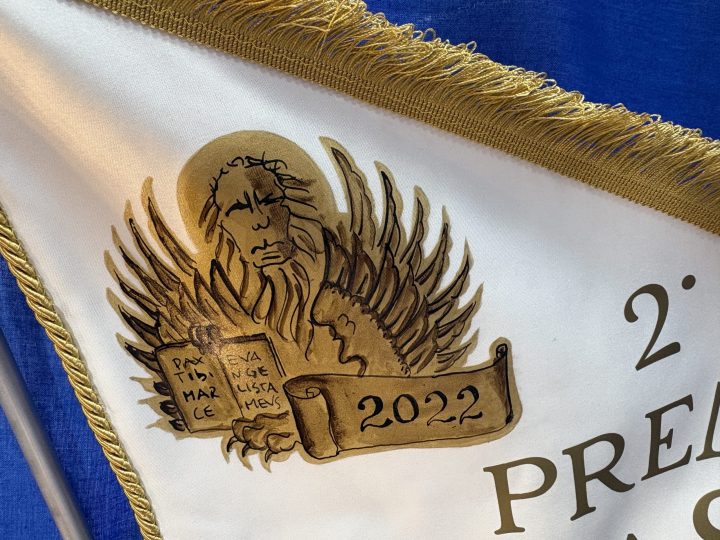
Detail of a flag made by Anna Campagnari at the Boat Show in Venice, 2026
History or folklore?
It feels strange to know the winners of the Historical Regatta will no longer receive a beautiful flag, hand made by someone who knows the value of all the sacrifices you make to win a Venetian rowing competition.
It sounds to me there is little understanding or rather it turns these competitions into “folkloristic” events, where rowers and their achievements matter less than the show and the audience.
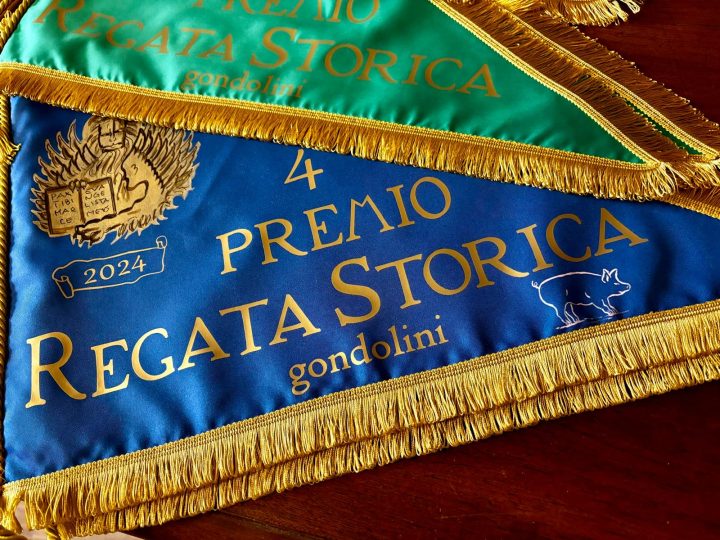
Detail of a flag made by Anna Campagnari with the image of a little pig, a reference to the historical tradition of giving a little pig as a present to the regatta winners; photo with courtesy of Anna Campagnari
And isn’t that significant, getting back to Maria Boscola, that her painting, quite unique indeed, is not placed in the section together with art works by Carpaccio, Giovanni Bellini, Antonello da Messina. No. You will find it hanging in the section dedicated to arts and crafts, Venetian traditions, as if a beautiful portrait of a woman winning several regattas and flags was not real art. Well, winning a regatta and a flag as a prize is real art, so it does deserve a proper and respectful recognition, don’t you agree?
by Luisella Romeo
registered tourist guide in Venice, Italy
www.seevenice.it