The lagoon of Venice constantly surprises us. In 2025 a group of archeologists researching in the northern lagoon discovered an ancient ostrearium, a vivarium of oysters which had been covered under mud and debris for centuries. A month ago the results of this discovery were finally presented with a detailed publication at the prestigious Ateneo Veneto.
A discovery under the water of the Venetian lagoon
Carlo Beltrame and his equipe beautifully described their research in the area of the lagoon of Venice north of Lio Piccolo, not too far from the islands of Torcello and Burano.
The area has been explored by several groups of archeologists in the last forty years. The pioneer was Ernesto Canal in 1988. Canal was an amateur archeologist who was convinced the lagoon north of Venice had been inhabited by ancient Romans, long before the barbaric invasions which brought the Roman Empire to an end in the 5th century AD.
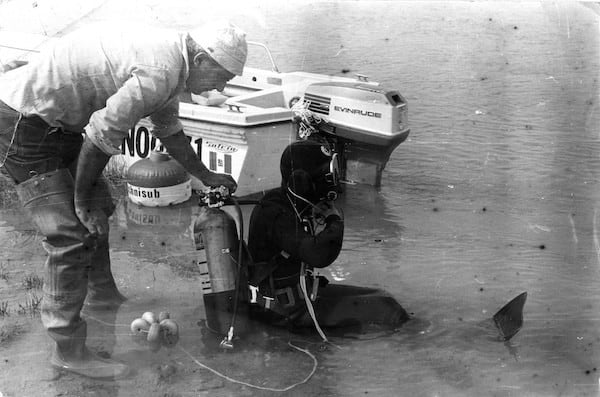
Photo taken from the article on Ernesto Canal by Maurizio Crovato: https://www.enordest.it/2024/10/20/tito-canal-larcheologo-di-venezia-prima-di-venezia/
Close to the Agriturismo Le Saline, the archeological digging has brought to light interesting remains. Over 3000 fragments of colourful frescoes from the Roman period, pieces of pottery and tiles, a beautiful gem: it looks like the foundations of a Roman villa, possibly inhabited in different times in history. According to the analyses made in 2010 by Valentina Goti Vola, the site dates back to the 1st century BC-1st century AD.
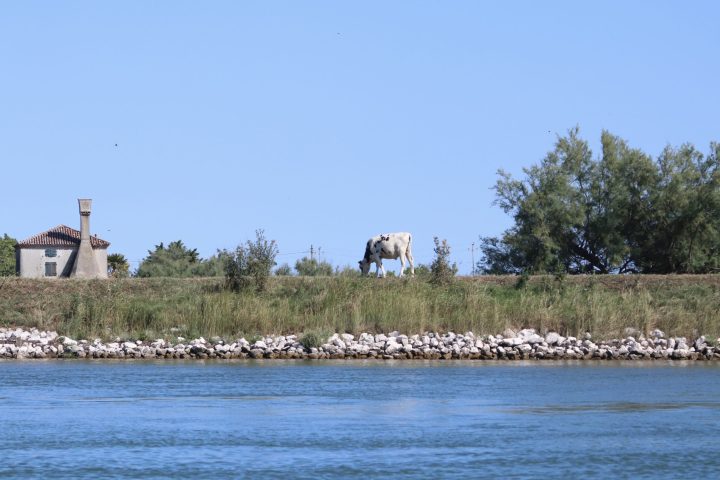
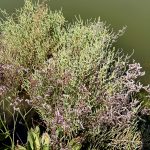
Near the archeological area of Lio Piccolo, northern Venetian lagoon
The villa was quite luxurious and it was built on oak piles. It was strategically positioned at the edge of a river, close to the sea, facing the lagoon, perfect for navigation, easily accessible from the sea, but also in connection with the Roman town Altinum via some lagoon channels. It experienced tides.
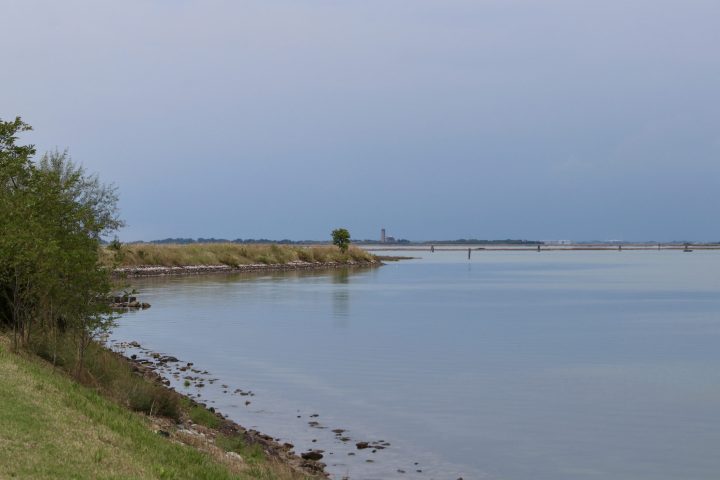
The photo was taken just a few meters away from the the archeological area of Lio Piccolo, northern Venetian lagoon. In the distance you can see the bell tower of Torcello and the airport “Marco Polo” located not too far from where the ancient Roman town of Altino once was
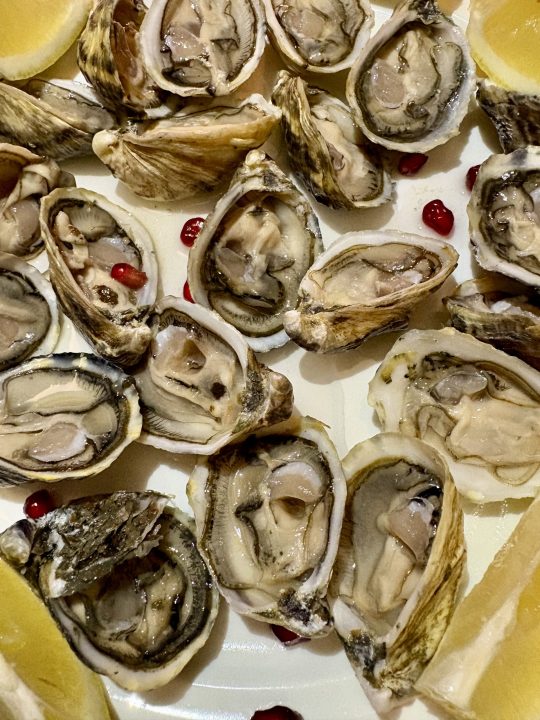
Oyster shells in an ancient pool in the lagoon of Venice
Nearby archeologists discovered a pool. Not easy to uncover archeological remains under the water, as there are strong currents in the area —which I can guarantee it is so, as when we sail there with our traditional boat “sanpierota”, you need to be an expert to govern the boat! The water is also very unclear, due to the mud constantly floating, turning the vision very blurred.
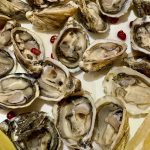
The pool was covered in mud at the end of the 2nd century AD and it now lies 3,25 meters under the current zero level of the tide. Probably a sudden event covered it up. At the bottom of the pool, there lay still more than three hundreds oysters! The vast majority are of the Ostreidae family. Some are Japanese or Pacific oysters —likely sticking to the pool in modern times—, but below there are many local ones, called Ostrea edulis, considered contemporary with the construction of the pool. They are all adults, so a possibile explanation is that they were not in the tank to be grown, but just to be kept alive for some very tasty banquets!
Pollen telling us the history of the area
The interesting thing is the oysters had some pollens trapped so the analysis has allowed to reconstruct the environment. Olive trees, vineyards, myrtle and pistachio plants. Hazelnuts, pines and oaks would be around, too.
Growing oysters in Venice (and surrounding areas) nowadays
The discovery of this ancient vivarium of oysters in the lagoon is not the only surprise the lagoon has held for us. For some years by now, at least since 2021, the lagoon of Venice and the delta of the Po river have been studied as to bring back local oysters.
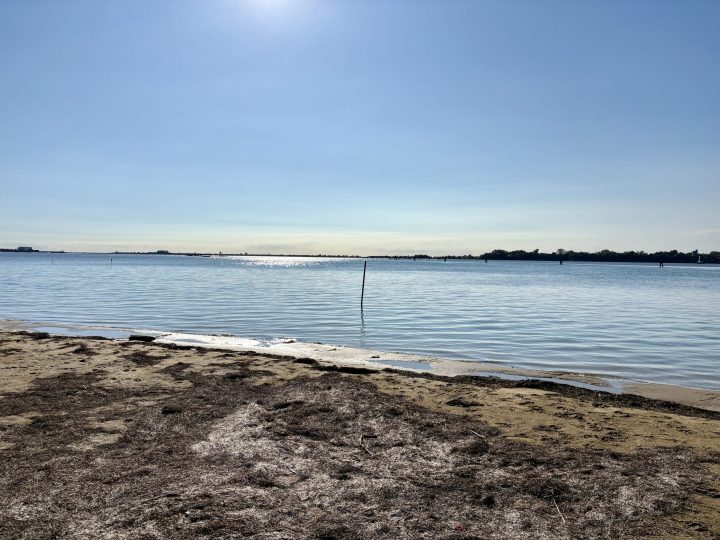
View of the Lido inlet by the island of Sant’Erasmo
The return of oysters’ vivariums in the Venetian lagoon and the Po river delta has been greeted with enthusiasm as it seems it could also give some relief to the fishermen who have lost mussels and clams with the arrival of the aggressive blue crab in the last years.
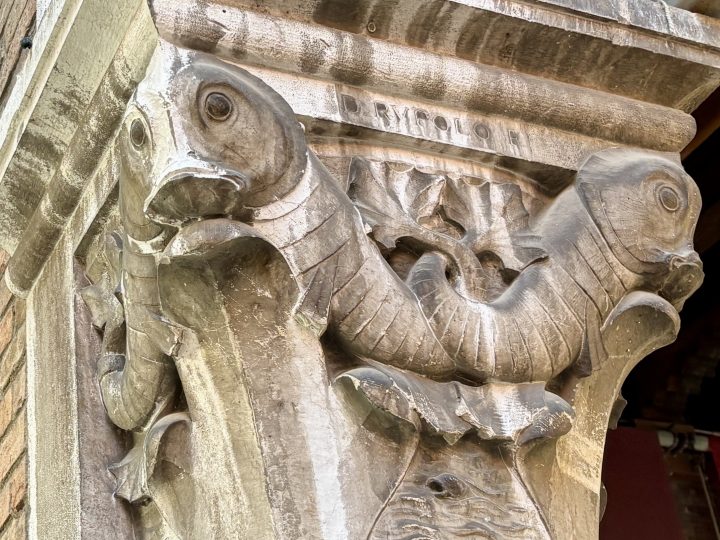
Fish market in Rialto, detail of a capital representing fishes (early 20th century)
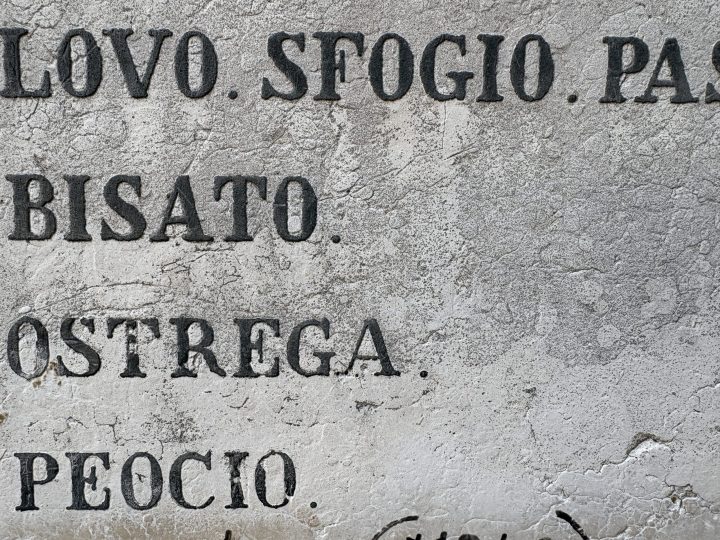
Detail from the stone plaque of seafood species available at the Rialto market establishing the minimum length allowed to be sold; oysters (“ostrega” in Venetian dialect) are mentioned and they need to be at least 5cm long (20th century)
Sustainable aquaculture in the lagoon of Venice
Not just. Oysters’ aquaculture is a sustainable activity. Oysters’ shells can capture CO2 in a solid form and therefore help against the so-called greenhouse effect, the gradual heating of the atmosphere. They do not need to be fed, there is no need for fertilisers, pesticides or antibiotics.
Moreover, oysters can “clean” the water as they filter large quantities of water. Thus, they improve the quality and allow for the creation of favourable habitats of numerous maritime species.
At the moment there are nine companies operating between Caorle and Chioggia up to Porto Tolle and the Delta of the Po river. Also Chiara Pavan, the cheffe at Venissa restaurant on the island of Mazzorbo, has praised them. She has inserted them in her menus, highlighting the different organoleptic qualities and flavours according to the different areas.
You can find them at the Rialto market. More and more restaurants in Venice offer oysters. Check: they are not French.
It certainly would help if the VAT currently applied would change. At the moment they are considered luxury food and the VAT is 22%, unlike the 10% VAT seafood in Italy is charged. I read in France the VAT is 6%, but one can always improve!
It would be a delightful and interesting way of keeping an ancient tradition alive after Cassiodorus at the court of Theodoric the Great in the 6th century AD mentioned how prestigious inhabitants of the Venetian lagoon so many centuries ago enjoyed oysters.
by Luisella Romeo
registered tourist guide in Venice, Italy
www.seevenice.it
Bibliography
www.youtube.com/watch?v=ARkitGTvOyw
https://edipuglia.eu/PDF/Ostrearum.pdf?v=2
In the cover photo, Le Mignon Oysters from Sacca di Goro, by the Po River Delta